Bug Hatch Walleyes on Erie or Saginaw Bay
We are now in what some people call "the dog-days of summer" on the Great Lakes. The bug hatch has been going strong for a few weeks now and that can sometimes cause the fishing to get tougher, especially if you fail to adjust your approach. We have all had those days when the fish seem to be stuffed to the gills with bugs and don't want to bite. However, on most days, you can still find a hot bite with the right tactics for the conditions.
When the bugs are hatching, I usually abandon my favorite crankbaits and transition to other options. Here are my typical "go-to" options for this time of the year.
1) Crawler Harnesses (spinners): There are a ton of options out there for harnesses; however, I prefer to make my own. I primarily use two-hooks and large #5 Colorado blades for mine. When it is sunny, it is hard to beat Gold or Anti-freeze blades.
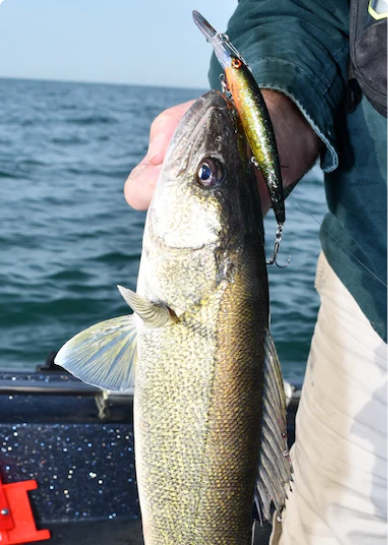
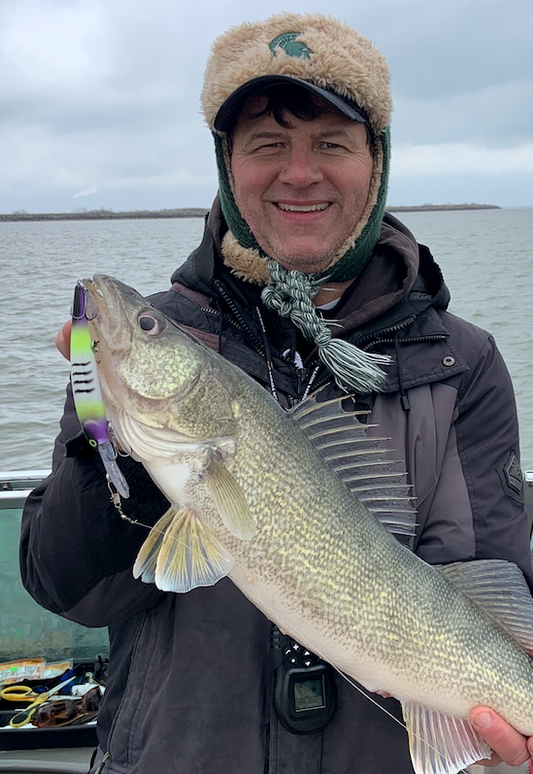
This 7.5#, 28" walleye fell victim to an anti-freeze bladed harness recently on Erie. Shown with my buddy Ken Constable holding it.

When it is cloudy or low-light conditions, then "painted" blades will usually outshine others. For example, these are some of the custom ones that I make.


2) Flies & Spinner Combos: Not many people ever use flies for walleyes; however, it makes sense that they would work, especially during the bug hatch. I learned this technique from a local guide and good buddy of mine, Captain Nick Homayed. As far as I know, he pioneered this technique on Erie and the Detroit River. I borrowed the concept and started making my own. I generally prefer the ones that look like Mayfly larvae, as they have been more consistently effective for me. However, there are times when many colors will shine. Lately, the flies have been more effective than harnesses for us. The nice thing about the flies is that you can catch fish on them without any bait. This is especially important on those days when the junk fish are driving you crazy by stealing your crawlers constantly. They tend to work best on days with a nice "walleye chop", as you need the wave action to add a little "life" to them while trolling. I am considering adding these to my catalog, but I need to determine if there is a market for them or not. Here are some examples of flies that have worked well for me during the bug hatch. I am new to fly-tying, so if you are an avid fly fisherman and have been tying flies for years, they will probably look like a 5-year old tied them, but they work!


3) Spoons: For some reason, smaller spoons seem to work well during the bug hatch. We generally pull them behind mini-discs or smaller Dipsey divers, either with boards or straight back, depending on the situation. Usually both. Mini-discs or Jets behind boards, then Dipsey divers right off of the boat. With spoons, we generally troll fairly fast. 2 mph would be the minimum, and we are usually 2.5 - 2.8, depending on the water temps, etc.
Other considerations:
- Bottom vs Suspended: In Lake Erie or the Saginaw Bay, the walleyes are typically suspended. Especially on flat calm sunny days when the bugs are hatching. I know it seems backwards, but the walleyes usually come up high on suny days, and stay deeper on dark cloudy, windier days. This could be due to the fact that the bugs are hatching and the smaller bait fish are able to follow them to the surface to feed. The walleyes come up chasing both. At least that's my theory. I have caught 8-10 lb walleyes within the top 10 feet of water, in mid-summer, over 60+ feet of water. So, I know they do it. At least some of them. Since I have had Garmin Livescope, I have learned that the ones that I am marking deep on 2D, are usually up higher before I get to them. They either drop towards the bottom or scatter to the sides as soon as the boat gets within 40-50 feet from them. When I look out to the sides, I see lots of fish 6-10 feet down. There are other fish 10-15 down and then more at the bottom. This is why I typically begin "my program" by targeting each 1/3rd of the water column with my baits. Let's say. I am fishing in 21 feet of water. I might start with my outside board with a 1 oz inline weight, 20-30 feet back, targeting the upper 1/3rd of the column. I don't like to have my leads much farther back than it is deep, or they will be dragging bottom on the way out. With my middle board, I might try a 2 oz inline, 20-30 back, targeting the middle part of the column. And then with my inside board, I might use a 3 oz in-line, 20-30 back, targeting the lower 1/3rd. If we can run more, then I would run a "boat rod" with either a heavy inline weight (4-6 oz) or a heavy bottom-bouncer. I keep these heavy so that we don't hook them on the way in and out with the other rods. There are days when the boat rods are on fire, and other days when they don't catch anything but sheep and white perch.
- Speed: With harnesses, I generally prefer to run between 1.0-1.6 mph. However, if the junk fish are bothering us too much, I have done well running faster. 1.7-2.0 can be good on some days. I also like to "speed set" when putting out our lines. I bump it up to 1.6-1.8 while setting lines, so that we can get them out faster and not have them dragging bottom on the way out. Also, on calm days, it helps to constantly be changing speeds to add action on your baits. Either by doing "S-turns" or by bumping your speed up and down with your trolling motor or kicker. It is amazing how many times multiple rods will go back after a change in speed. Walleyes are notorious followers and they will grab it if they think it is getting away.
- Here is a handy "rule of thumb" chart to have with you on the boat:
-

- The chart above is not exact, but it will get you close enough to catch fish. I have verified these ratios with my Livescope and actually testing them. Obviously, the more line you have out the more friction from the water will impact these ratios, but again, it is designed to get you close.
- Lastly, the "line out" number should not count any line that is above the water. If you are running them behind boards, then there is no line above the water. However, with boat rods, there can be anywhere from a couple feet, to as much as 15-20 feet, if the rods are high in a holder. That number should not be counted. For example, let's say you have a "boat rod", in a holder with a 3 oz weight on it. The line-counter shows 40, but there is about 10 feet of line above the water. I would subtract the 10 from the 40 and call it 30 back, or 30 feet of line out.
- Conclusion: You can still end up with a nice box of walleyes during the bug hatch if you are willing to adjust your tactics slightly. Harnesses and flies seem to do a better job of attracting walleyes during this time. I believe harnesses and crawlers work because walleyes have a hard time resisting a real worm. The only problem with this approach sometimes is that everything else likes them too. Sheep, Catfish, White Perch, etc. I think flies work because the mimic the bugs that the fish are feeding on. I can't prove it, but it makes sense logically and they have been working very well for us lately. If you are reading this and are interested in purchasing some of my custom flies, please email me at slimshadycustoms@gmail.com and let me know. I am trying to determine if it makes sense to me to sell them through my store and I need to know what the market might be for them.